When Silence Feels Like Rejection
October 1, 2026 • 5 min read
There is a difference between receiving no answer and feeling rejected.
The two can occupy the same silence, yet they are not quite the same thing. One describes what has not happened. The other begins to say something about what the silence means.
That distinction can be difficult to hold when nothing changes.
Delay still leaves something open. It allows for the possibility that what has not happened simply has not happened yet. Rejection feels more final. It seems to turn silence into a verdict.
And perhaps that is where silence becomes especially difficult to carry.
Not because silence suddenly contains more information, but because interpretation begins filling the space that information has left empty. What is unknown can start to feel known. What has not been answered can begin to feel answered in another way.
No becomes easier to hear than not yet. Distance becomes easier to perceive than waiting. Absence can begin to feel more believable than presence, even though the silence itself has not explained which interpretation is true.
That may be part of what makes this kind of silence so unsettling. Nothing inside it necessarily announces rejection, yet rejection can begin to feel like the most convincing reading of it. The silence remains silent.
It does not clarify whether something has been refused or merely remains unresolved. It does not explain whether the waiting carries meaning, whether the delay carries meaning, or whether meaning can even be known from the silence itself. Still, the heart may want the uncertainty to become something more definite.
Rejection offers a kind of terrible clarity. It hurts, but it closes the question. Delay does not offer that closure. Delay asks the question to remain alive.
Perhaps that is why the difference between them can become so difficult.
To call silence rejection is to give the silence an ending. To call it delay is to leave the ending unwritten. One interpretation settles the matter painfully; the other preserves an uncertainty that may be harder to live beside.
Neither word changes the silence itself.
The same unanswered space remains. The same lack of explanation remains. What changes is the meaning placed around it.
And meaning can quietly alter the way silence is carried.
If silence means rejection, then every additional moment may seem to confirm what has already been decided. Waiting no longer feels neutral. It can seem like evidence accumulating around a conclusion that has already begun to form.
But if silence is delay, the same passage of time remains unresolved.
That does not necessarily make it easier. Delay does not promise an answer. It does not guarantee that what is hoped for will eventually arrive. It simply refuses to make silence say more than silence has actually said.
That refusal leaves an uncomfortable amount of room.
Room for uncertainty. Room for questions that cannot yet be closed. Room for the possibility that silence may not carry the verdict it seems to carry.
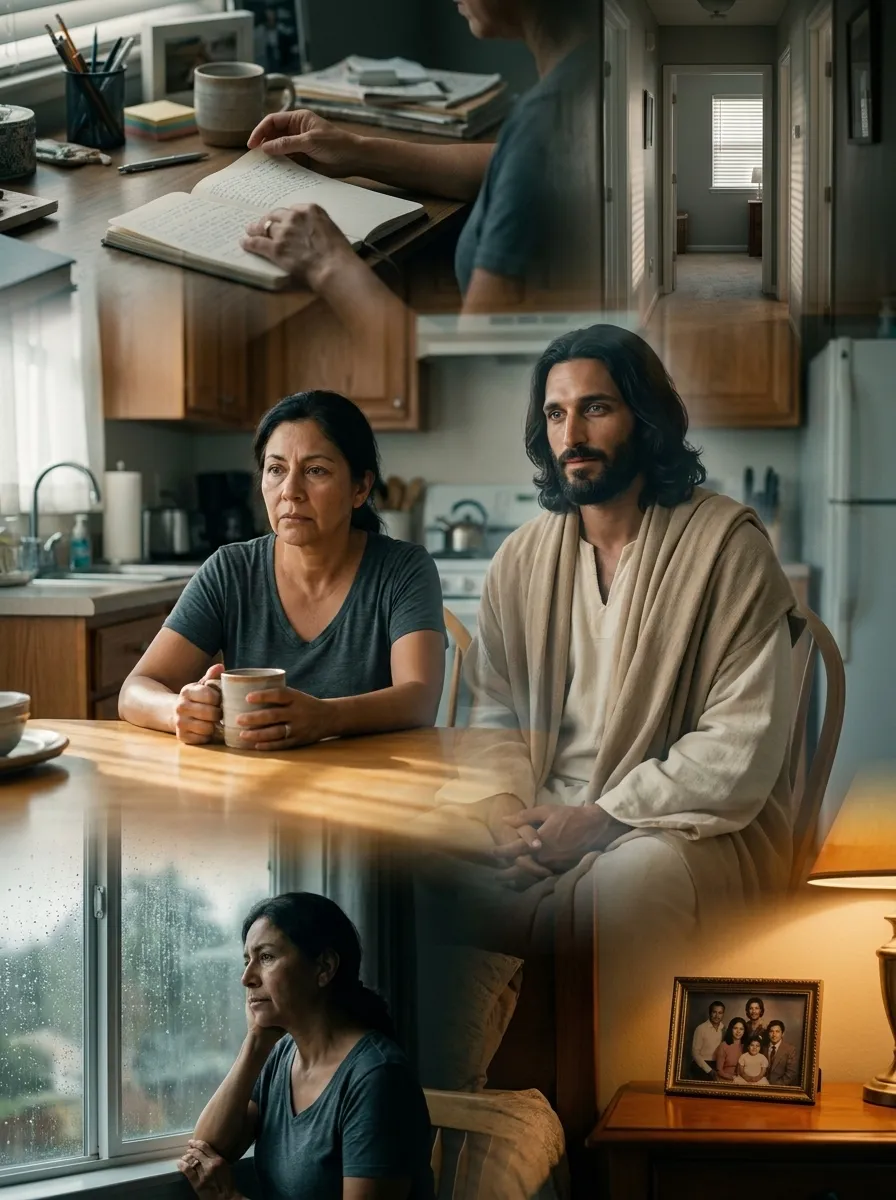
And somewhere inside that room sits another question. What happens to the presence of Christ when silence has already been interpreted as rejection?
If rejection has become the meaning of silence, then presence itself can become difficult to recognize. Not because presence has necessarily disappeared, but because the silence has already been given another explanation. A quiet God can begin to feel like a distant God.
An unanswered prayer can begin to feel like an unheard prayer. Waiting can begin to resemble abandonment simply because nothing visible interrupts it. Yet there is still a difference between what silence feels like and what silence has established.
That difference does not solve the silence. It does not turn delay into reassurance or transform uncertainty into certainty. It only keeps the interpretation from becoming indistinguishable from the experience itself.
The silence is real. The feeling of rejection may also be real. But whether the silence itself is rejection remains another question.
Perhaps this is where the words become important. Not as a way to escape what hurts, but as a way of noticing what has quietly happened inside the interpretation. Somewhere along the way, silence may have stopped being merely silence and begun carrying a conclusion.
Was that conclusion given? Or did it slowly become the only meaning that seemed possible? There may be no immediate way to answer that.
And there does not need to be. The question can remain beside the silence without forcing the silence to resolve itself. It can remain there without pretending that waiting is easy, without insisting that delay must eventually produce the answer being hoped for.
It can simply keep one distinction visible. Silence is not the same thing as rejection. But neither does that sentence tell us exactly what the silence means.
It only prevents one interpretation from becoming the whole reality before the reality itself has spoken. That may leave the silence exactly where it was.
Unanswered. Unexplained. Still capable of being felt as distance.
And yet another possibility remains near it: “Sometimes silence simply becomes the place where His presence must be discovered differently.” Not proven differently. Not explained differently.
Discovered differently. Even that does not settle the question. It does not tell us when silence is delay, what the delay is for, whether an answer will come, or how long uncertainty may remain.
It simply makes the silence larger than one interpretation: rejection may describe what it feels like, while delay may describe what it is.
Maybe those words are still too certain. The silence has not said.