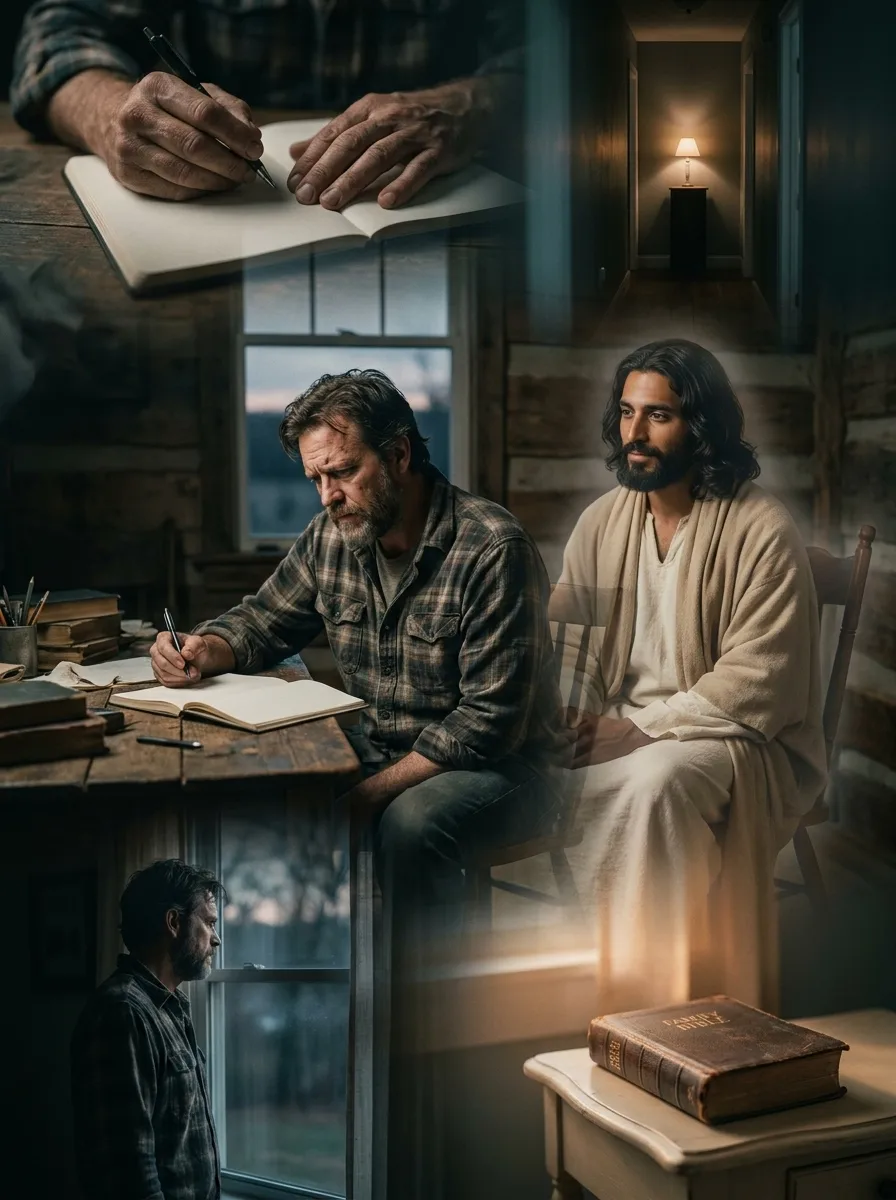
When Faith Has No Answer to Give
October 4, 2026 • 5 min read
There are moments when an answer would make everything easier. Not necessarily because the answer would change anything, but because an answer gives the mind somewhere to stand. It closes a space that otherwise remains exposed.
Spiritual language can seem especially capable of closing that space. A sentence can sound certain. An explanation can sound complete.
But sounding complete and being true are not the same thing. There is a particular tension in recognizing that distinction while still wanting an answer. Something can be deeply desired and still remain unavailable.
That is where the urge to fabricate an answer becomes difficult to examine.
The word fabricate can sound deliberate, almost dishonest. Yet the tension here is quieter than that. It is the temptation to say more than can actually be known because leaving the question untouched feels somehow insufficient.
A spiritual answer can give shape to what has none. It can assign a reason where no reason has been given. It can turn uncertainty into purpose, silence into explanation, and mystery into something that sounds almost settled.
The words may even fit beautifully. That beauty does not necessarily tell us whether they are true.
Perhaps this is one reason unanswered questions can become uncomfortable within faith. They expose the difference between believing something and knowing why a particular thing happened. Those are not identical forms of certainty.
It is possible to speak about God while still being unable to explain a circumstance. It is possible to hold faith without possessing an interpretation for everything faith encounters. Yet the empty space remains.
And emptiness invites language.
A reason can quickly begin occupying that space. The mind may decide that this happened because of that, that God was doing this, or that the silence itself meant something definite.
Each sentence creates a little more structure. Soon the question no longer looks unanswered. It has been surrounded by enough explanation that the absence of an actual answer becomes harder to see.
But what has changed? The reality may still be unexplained. Only the language around it has become more confident.
That difference matters. An unanswered question carries uncertainty openly. A fabricated answer can hide uncertainty beneath a conclusion.
The conclusion may feel stronger because it gives uncertainty a name. It may also ask the question to become smaller than it really is. Questions do not necessarily disappear when an explanation is placed over them.
Sometimes they remain underneath. The words may settle first while the unresolved thing continues quietly beneath them. What sounds resolved on the surface can still contain the same unanswered center.
There is something difficult about allowing that center to remain visible. It means admitting that spiritual language has limits. Not necessarily limits in what is true about God, but limits in what can honestly be said about a particular unanswered thing.
That boundary can feel almost like a failure of faith. If faith matters, shouldn’t it have something to say? Perhaps it does.
But having something to say is different from having an explanation. Those two possibilities can easily become confused. The pressure to explain may turn spiritual speech into an attempt to complete what remains incomplete.
Then the question changes. It is no longer only, Why is there no answer? Another question appears beside it: What happens if no answer is invented?
That second question may be harder. Because the empty space remains empty.
There is no convenient reason to place inside it. No interpretation that can be carried away as the final meaning. No sentence that makes the unknown stop being unknown.
And yet the absence of an explanation does not automatically become the absence of God. Those are also different things.
One concerns what can be understood. The other concerns whether divine presence depends upon that understanding. They may meet inside the same silence without becoming identical.
This is where the temptation to use a slogan becomes especially revealing. A slogan can make a large question small enough to hold in one sentence. But some questions may refuse that size.
A phrase can be neat while reality remains complicated. A statement can be comforting while the question beneath it still asks to be taken seriously. There is no need to decide that every unanswered thing must remain forever unanswered.
There is also no need to decide that every unanswered thing already possesses an explanation available to us. Between those two certainties lies a less finished place. Faith may still be spoken there, but perhaps with fewer claims.
Christ may still be named there without being used as the explanation for what has not been explained. His presence need not become a theory about why something happened. That distinction leaves much unresolved.
It does not tell us what the silence means. It does not identify a hidden purpose. It does not reveal a reason waiting behind the question.
It simply prevents the desire for certainty from becoming certainty itself. There may be something uncomfortable about that restraint.
An unfinished question remains unfinished. The mind still reaches for completion, and spiritual language still offers many ways to imitate it. The difficulty is knowing when language is revealing something true and when it is merely protecting us from the emptiness of not knowing.
That difference cannot always be identified quickly. One possibility is that it cannot always be identified at all. So the question remains open: when no spiritual answer has actually been given, what does faith become if it refuses to manufacture one?
There may be no sentence large enough to close that question without changing it.