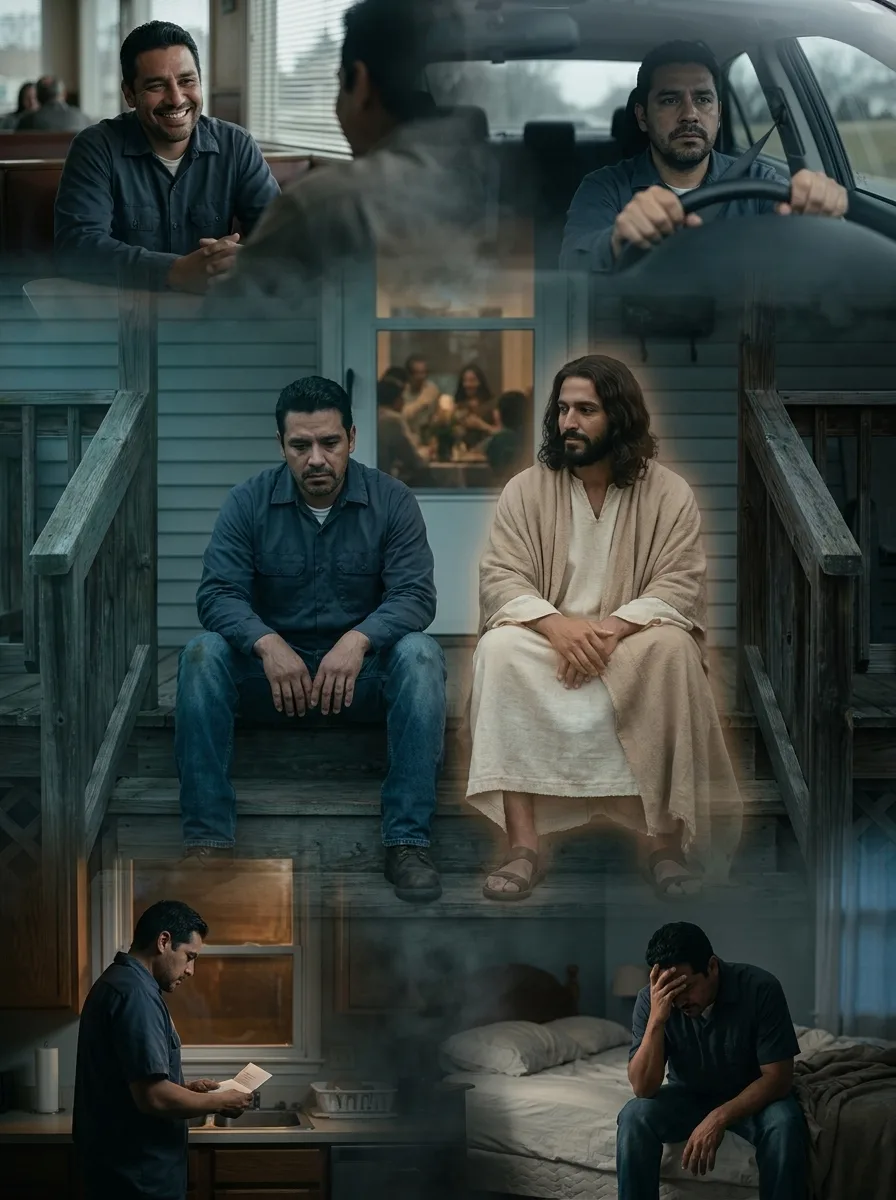
When Everyone Else Seems Ready for You to Be Better
November 22, 2026 • 5 min read
There may come a point when your sorrow is no longer the only thing asking something of you. The people around you may seem ready for a different version of the story—one with clearer progress, steadier language, fewer visible traces of what has not yet settled. And you may find yourself resisting that pressure.
Not necessarily because you know exactly what recovery should look like. Perhaps the difficulty is precisely that you do not know whether what you are carrying can honestly be described as finished. The expectation of completion can arrive before you have language for where you actually are.
That creates an unusual tension. There is the experience itself, still unfinished in whatever way it remains unfinished, and beside it there is the possibility of being expected to demonstrate that you have moved beyond it. Those two realities do not always fit neatly together.
A completed emotional recovery is easy to recognize as an idea. It suggests a clean boundary between what was painful and what now belongs safely to the past. Yet lived experience does not become complete merely because completion would be easier to explain.
Sometimes the pressure is contained in the very idea that there should be something visible to demonstrate. A certain tone. A certain steadiness. A certain way of speaking about what happened without appearing to remain too close to it.
But what exactly would such a demonstration prove?
Would appearing recovered mean that the sorrow had actually reached its end? Would speaking with greater ease establish that everything inside you had become equally settled? Or would the appearance of completion simply be an appearance whose meaning remains uncertain?
These questions do not accuse the people around you. They do not require us to decide why anyone might want to see recovery completed. The pressure itself is enough to examine without assigning motives that cannot be known.
What matters is the relation between that pressure and the truth you are still inhabiting. When another person seems ready to see an ending, your unfinishedness can begin to feel almost inappropriate. The continued presence of sorrow may seem to require explanation simply because it has lasted beyond whatever boundary others expected it to respect.
Then resistance itself can become complicated.
To resist presenting yourself as fully recovered may feel like refusing a conclusion you cannot honestly claim. At the same time, there may be no equally tidy statement available to replace it. “I am not finished” can be true without explaining what remains, how long it will remain, or what it ultimately means.
There is humility in that uncertainty, even when it offers very little social neatness. Faith can enter this tension in delicate ways. If spiritual language becomes attached to the expectation of recovery, completion may begin to carry an additional weight: perhaps being better would appear to say something good about faith, while remaining affected might seem more difficult to reconcile with it.
Yet the nearness of Christ is not postponed until emotional experience becomes easy to present. Christ’s presence is not postponed until suffering is over.
That conviction does not establish a timetable for sorrow. It does not determine when recovery is complete, nor does it offer a spiritual label for whatever remains. It simply refuses to make the end of suffering a prerequisite for the presence of Christ.
And that distinction leaves room around the unfinished place. Christ does not have to stand only beside the version of you that can explain the experience calmly. His presence need not wait for a final sentence, a convincing account of progress, or a visible sign that the difficult part has become entirely past tense.
This does not tell you what you should reveal to others. It does not settle how you should respond when someone appears to expect completion. Those questions belong to realities that cannot be determined from the outside.
But it keeps one thing from becoming necessary: the idea that Christ can accompany you only once your sorrow has become presentable.
There is a difference between healing and the performance of healedness, even when neither can be easily defined. The first concerns whatever is actually happening within an unfinished human life. The second concerns what that life can make visible to someone else.
The two may overlap. They may also remain difficult to distinguish.
This is why the pressure to demonstrate completion can feel so searching. It asks for something outward at precisely the point where the inward reality may still resist a clear name.
You may know that you do not want to pretend. That does not mean you possess a complete alternative explanation.
Perhaps sorrow can remain unfinished without becoming a statement of defiance. Perhaps resistance can simply mean refusing to call something complete before you know whether that word belongs to it. And Christ can remain there without demanding that the ambiguity resolve itself first.
His presence does not require you to turn unfinished sorrow into a spiritual achievement. It does not require you to make incompletion impressive, meaningful, or beautiful. The unresolved condition may remain exactly what it is: unresolved.
The uncertainty is still there. You may still be unable to say with certainty what recovery would mean for you, even while resisting the pressure to present it as complete.
The expectation may remain, and so may the sorrow. What others are prepared to see and what you can honestly claim do not have to become the same thing.
For now, “unfinished” may simply be the word that asks you to pretend the least.