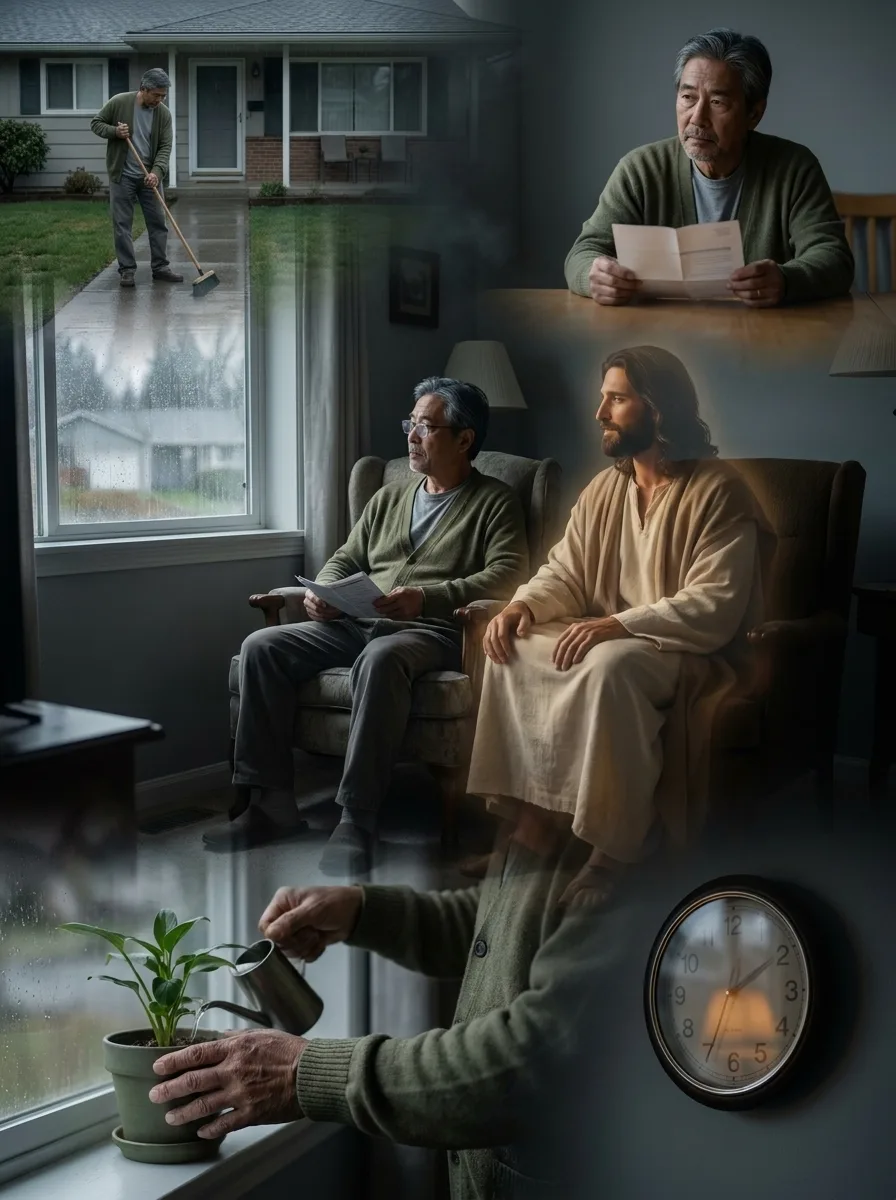
Does God Have to Be Spectacular to Be Moving?
October 27, 2026 • 5 min read
There is something compelling about the spectacular. A dramatic reversal, an unmistakable intervention, a moment so unusual that ordinary explanations seem insufficient—these things can appear to carry their own spiritual weight.
They are difficult to overlook. They seem to announce that something has happened, and their visibility can make interpretation feel almost unnecessary.
But resisting the belief that God only moves in spectacular, headline-making miracles raises a different kind of question. It asks whether what is easiest to recognize as divine activity should also become the measure by which all divine activity is judged. Those are not necessarily the same thing.
A spectacular event is visible by definition. Its scale, timing, or unexpectedness gives it a prominence that ordinary experience does not possess.
That prominence can make the connection between visibility and significance feel natural. If something extraordinary happens, it seems reasonable to call attention to it; if nothing extraordinary happens, there may appear to be much less available to notice. Yet there is an interpretive step hidden inside that contrast.
The spectacular can demonstrate that something remarkable occurred. It cannot, by itself, establish that God moves only through what becomes remarkable. The word only changes everything.
Without it, spectacular miracles can remain spectacular. They can retain all their wonder without becoming a boundary around the ways God may be present or active.
With it, however, the extraordinary begins to function as a requirement. Divine movement must somehow cross a threshold of visibility before it becomes recognizable as divine movement at all. That threshold deserves examination.
What qualifies something as large enough, dramatic enough, unlikely enough, or visible enough to count? And who determines when that threshold has been crossed?
Those questions become especially difficult because spectacle is easier to identify than quietness. Extraordinary events call attention to themselves; what is not extraordinary offers far less obvious evidence. But lack of spectacle is still only lack of spectacle.
It does not automatically explain what God is doing or not doing. It does not announce absence, inactivity, indifference, or distance. Those conclusions require interpretation.
The distinction matters because visibility and divine activity can begin to occupy the same conceptual space without ever having been shown to be identical. What can be seen clearly may gradually become what is considered spiritually real.
Then the dramatic does more than inspire wonder. It quietly becomes the standard.
There is no need to diminish miracles in order to question that standard. The extraordinary does not have to become suspicious simply because the ordinary remains unresolved. A spectacular act of God can remain worthy of awe without being asked to define the entire grammar of His presence.
Perhaps the unresolved tension lies precisely there. If God’s movement must be spectacular before it can be recognized, then visibility has acquired considerable authority. What becomes noticeable also becomes interpretable, while what remains unremarkable is left with less obvious spiritual language.
But less obvious is not the same as absent. The difference may seem small, yet it preserves an important uncertainty. What cannot easily be pointed toward may still resist the conclusion that nothing divine is occurring.
Divine love need not be measured by visible outcomes alone. That statement does not provide a substitute measurement. It does not tell us what every quiet moment means, nor does it require every ordinary experience to contain a hidden miracle waiting to be uncovered.
It simply refuses to let visibility settle the matter by itself. There is restraint in that refusal. It allows the spectacular to remain spectacular without turning it into a monopoly on spiritual significance.
It also leaves ordinary experience unforced. Nothing quiet has to be renamed miraculous merely to protect it from seeming spiritually empty. Perhaps this is where the inquiry becomes more demanding.
If spectacle is removed as the exclusive evidence of divine movement, what remains available for recognition? And if no alternative formula is supplied, can the question remain open without immediately being filled by another standard?
That may be uncomfortable because spectacular events offer clarity. They provide something concrete around which interpretation can gather. Quietness offers less.
Yet the absence of spectacle still does not complete the theological sentence. It tells us that nothing spectacular has become visible; it does not finish the claim about God. The unfinished portion matters.
There may be a temptation to resolve it by moving quickly in the opposite direction—to say that God is always doing something profound in every unnoticed detail, or that every ordinary moment contains a hidden spiritual message. But that would simply replace one certainty with another.
The question here does not need another total explanation. It can remain narrower. Does divine movement have to become spectacular before it becomes real?
Or has spectacle simply become one of the easiest forms of divine activity to recognize? Those are different propositions.
The first establishes a boundary around God. The second acknowledges a boundary around perception.
And perhaps even that distinction should remain under examination rather than being turned into a conclusion too quickly. The purpose is not to decide what God must be doing in every uneventful moment. It is only to notice that “nothing spectacular happened” and “God did not move” are not identical statements.
Between them is an interpretive space. No dramatic claim has to fill it. No hidden miracle needs to be invented there.
The space can remain open. And within that openness, one question may continue without demanding an answer yet:
If God’s movement becomes believable only when it is spectacular enough to be noticed, what exactly has been given the authority to define where God is allowed to be moving?