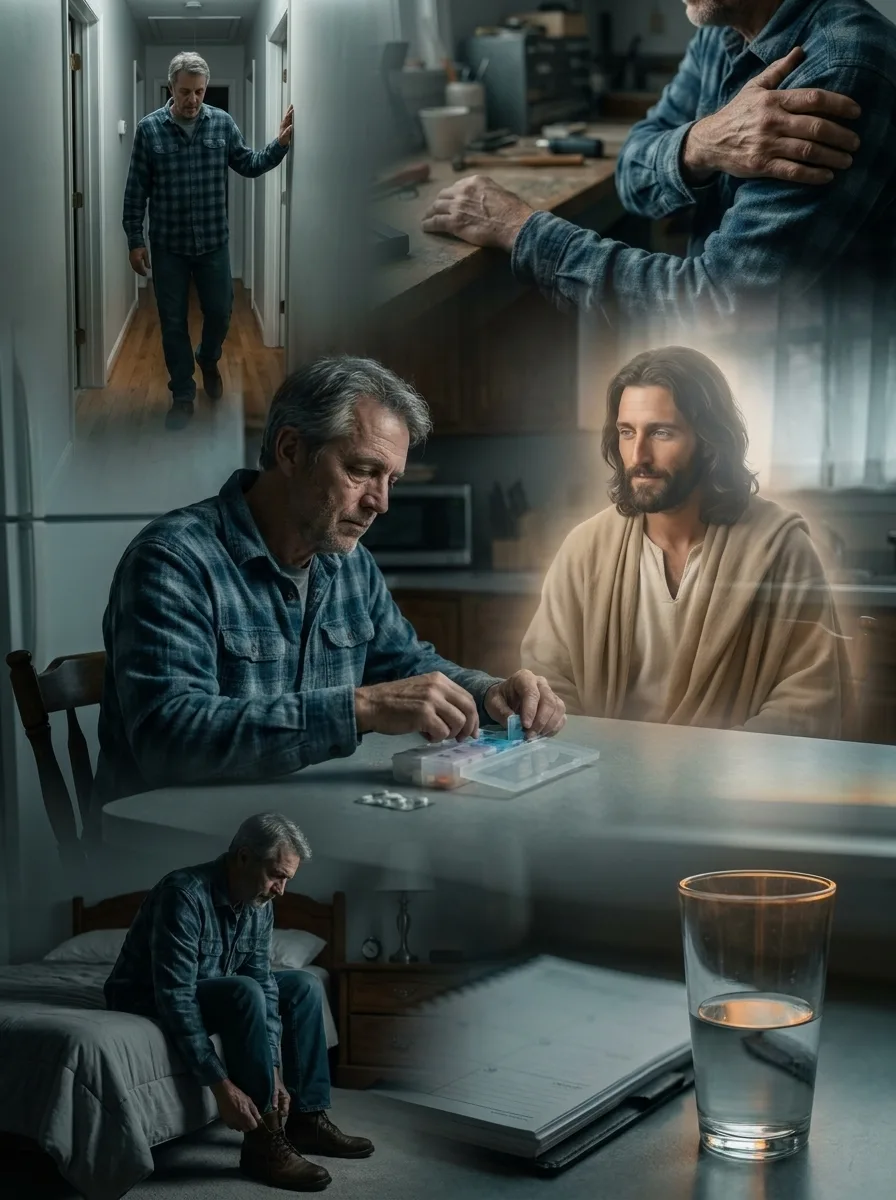
When the Struggle Doesn’t Leave, but Life Still Has to Continue
November 10, 2026 • 5 min read
There is a particular tension inside the phrase managed rather than cured. Cure points toward an ending. Management acknowledges continuation.
Accepting the reality of a chronic, low-grade struggle that simply must be managed rather than instantly cured does not begin with a dramatic turning point. It begins with the uncomfortable possibility that the struggle may remain part of the present without offering a clear moment when it can finally be declared finished.
That possibility changes the shape of the question. If resolution is not immediate, then the meaning of the struggle cannot be postponed entirely until resolution arrives.
But acceptance is a difficult word here. It can sound too close to approval, surrender, or a declaration that nothing should ever be different.
Those meanings are not contained in the word automatically. To acknowledge that something presently requires management is not necessarily to decide what its future must be.
The distinction matters because a desire for change can remain intact alongside an honest recognition of what is currently true. Wanting something to end and admitting that it has not ended are not opposing statements.
Still, the absence of immediate transformation creates its own uncertainty. A struggle that continues does not provide the clean spiritual structure of a problem followed by an answer.
There is no obvious boundary between before and after. There is only the continuing reality and the question of how that reality should be understood.
This is where cure can acquire an authority larger than cure itself. If transformation becomes the primary evidence that God has moved, then continuation becomes much harder to interpret. The struggle remains, so what should be concluded from its remaining?
That question cannot be answered merely by the fact that the difficulty persists. Persistence describes duration; it does not independently explain divine presence, spiritual significance, or the meaning of what has not changed.
Yet immediate transformation is compelling because it resolves ambiguity. Something was one way, something happened, and afterward it was different. Management offers no such clarity.
It acknowledges an unfinished condition. And unfinished conditions resist easy spiritual interpretation. Perhaps that is why the possibility that God’s greatest miracle is often not immediate transformation deserves to remain beside this kind of struggle without being used to explain it away.
The statement does not deny transformation. It does not suggest that cure is unimportant, undesirable, or somehow spiritually inferior. It places a limit on what immediate change is allowed to prove.
If transformation happens quickly, its visibility may make it easy to recognize. If it does not happen quickly, the lack of transformation still cannot carry an entire conclusion about God. That difference leaves room for a difficult kind of honesty.
The struggle can remain unwanted. Management can remain management. No spiritual language has to beautify either one.
There is also no need to claim that the struggle was given for a purpose, that its continuation produces a particular virtue, or that enduring it guarantees some eventual spiritual result. Those conclusions would say more than the continuing reality itself can establish. The inquiry can remain closer to what is actually present.
Something has not been instantly cured. Something still requires attention. And acceptance has to be considered without being confused with a verdict about what should happen next.
Perhaps that is the narrow space where the question becomes most demanding. If acceptance does not mean giving up on change, and if hope does not require pretending that change has already arrived, what exactly is being accepted? Possibly only the present tense.
Not the permanent future. Not an explanation. Not a reason.
Only the fact that, for now, the struggle remains something to be managed rather than something that has disappeared. There is a restraint in keeping the statement that small. It refuses both denial and overinterpretation.
The struggle is not treated as though it has already ended. Neither is its continuation allowed to become proof that nothing sacred can exist alongside it. That second refusal matters because persistent difficulty can easily be judged by the same standard as unresolved prayer: if nothing changed visibly, perhaps nothing happened spiritually.
But visible resolution and divine nearness are not identical categories. One may accompany the other. One may not.
The absence of one does not automatically define the absence of the other. This does not make management miraculous. There is no need to turn maintenance, adjustment, repetition, or limitation into spiritual spectacle.
The ordinary work of living with something unresolved can remain ordinary. One possibility is that the larger difficulty lies in how much significance has been assigned to endings. Cure offers an ending, and endings make stories easier to understand.
Management does not. It leaves the sentence grammatically unfinished.
The condition persists. Life continues around it. No final interpretation arrives simply because another day has been navigated.
That incompleteness can remain uncomfortable. There is no requirement to convert it into peace. There is no requirement to call it growth.
There is no requirement to find a hidden blessing inside the fact that the struggle continues. Acceptance may be smaller and less triumphant than any of those conclusions. It may simply refuse to call the present something it is not.
The struggle has not been instantly cured. The desire for change does not have to disappear because of that. And God’s presence does not have to wait outside the unresolved reality until transformation makes the situation easier to recognize spiritually.
Even that statement leaves much unanswered. What does divine companionship mean beside something that continues? What does hope mean when the desired ending is not available as evidence?
There may be no reason to settle those questions quickly. A chronic, low-grade struggle does not become easier to interpret merely because spiritual language is placed around it. The fact that it must be managed can remain exactly as limited, repetitive, and unresolved as it is.
It may be that the inquiry is not whether acceptance can make that reality beautiful. One possibility is that it is whether acceptance can tell the truth about what remains without allowing what remains to become the whole truth about God.