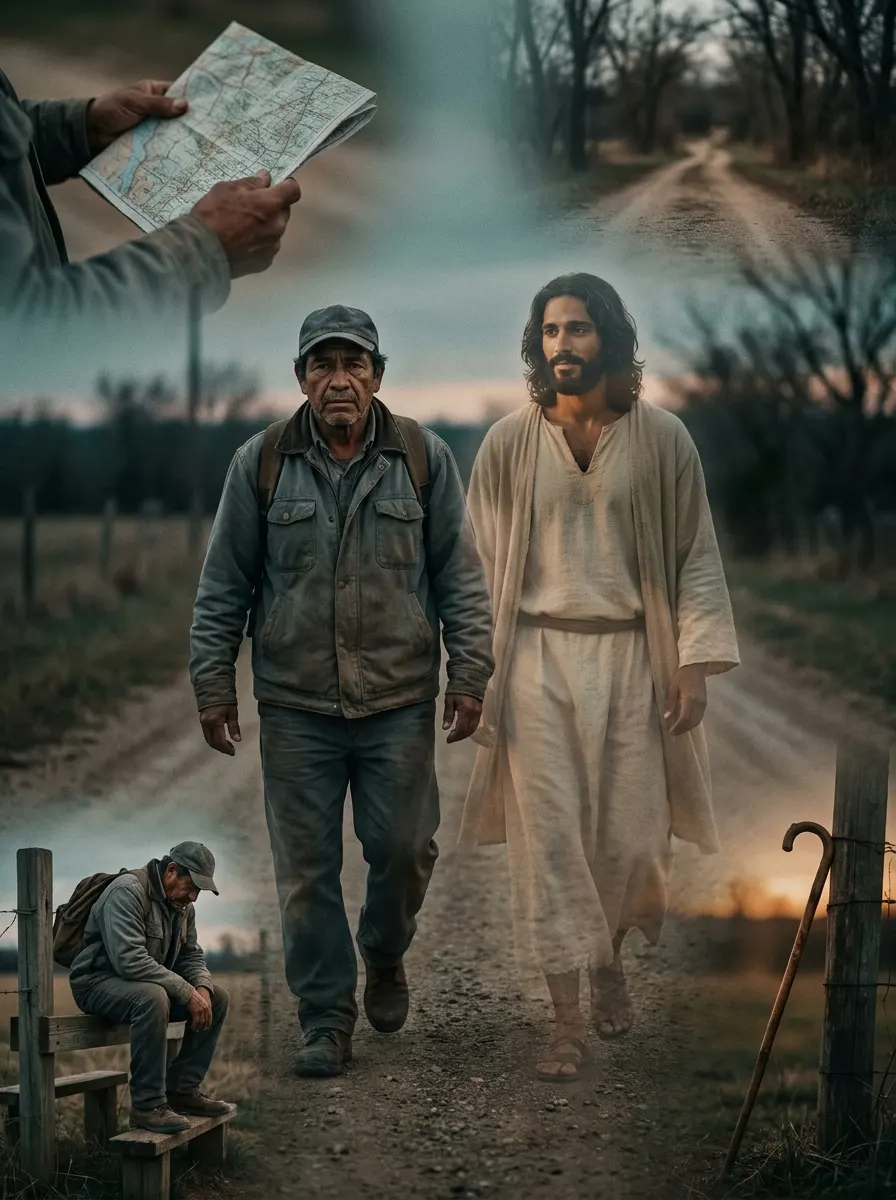
When Hope Has Been Deferred but the Road Still Continues
October 22, 2026 • 5 min read
Deferred hope creates an unusual kind of distance. The hope itself may still exist, but the expected arrival has moved farther away than once imagined. What seemed close enough to anticipate now belongs to an uncertain horizon.
Nothing necessarily says the hope is gone. But neither has anything brought it near. That can make acceptance difficult to define.
To accept that a hope has been deferred might sound like giving up on it. It might sound like lowering expectation, abandoning desire, or deciding that what was wanted no longer matters. But those conclusions are not contained in the word deferred.
Deferred is not fulfilled. It is also not necessarily ended. It describes something that has not arrived when hoped for.
That leaves the person carrying it somewhere between expectation and finality. Perhaps this is where the journey becomes complicated.
As long as hope seems imminent, walking can feel connected to arrival. The road appears to lead toward something recognizable. But when hope is deferred, the journey may begin to lose that visible relationship to the destination.
The road continues. The hoped-for outcome does not. At least not yet.
What, then, does continuing mean? Does moving forward mean becoming less attached to the hope? Does accepting the delay require changing what was desired?
Does continuing the journey imply confidence that the hope will eventually be fulfilled? None of those conclusions are necessarily available. And that may be precisely why deferred hope is difficult to carry honestly.
There is no completed story to interpret. The hoped-for thing has not happened. The journey has not ended.
The future has not explained the delay. Acceptance, then, cannot simply mean understanding. There may be nothing yet to understand.
It may not mean agreeing with the delay either. Agreement would suggest a reason has become clear enough to approve. No such reason has been given.
So acceptance may stand in a stranger place. It may mean seeing the delay for what it is without forcing it to become something else. The hope has been deferred.
That fact can remain painful without being denied. It can remain unresolved without being turned into a spiritual failure. It can remain important without controlling every meaning attached to the road ahead.
Still, that does not settle the question of continuing. Because a journey is different when something longed for has not arrived. The road that once seemed temporary may begin to feel more permanent.
The distance between desire and reality becomes harder to ignore. And perhaps the greatest temptation is to make a final decision before the story has actually reached one. To call the hope dead because it has been delayed.
Or to insist that fulfillment must still come because abandoning that certainty feels too close to abandoning faith. Both positions close what remains open. One declares the destination gone.
The other declares the destination guaranteed. Deferred hope may permit neither conclusion. That leaves faith in an uncomfortable middle.
“Faith allows us to keep walking even while some questions remain unanswered.”
The sentence does not say where the road ends. It does not say that every unanswered question will eventually receive the answer desired. It does not say that continuing guarantees arrival.
It simply places faith and unanswered questions on the same road. That is a different kind of relationship. Faith does not have to wait until uncertainty disappears before movement becomes possible.
But movement also does not have to pretend uncertainty has disappeared. The unanswered thing can remain unanswered. The deferred thing can remain deferred.
And the journey can still remain a journey. Perhaps that is what makes abandoning the road different from releasing control over its destination. The two can look similar from a distance.
Both may involve letting go of certainty. Both may involve admitting that the future cannot be commanded into a particular shape. But one ends the journey.
The other may simply stop requiring the journey to prove where it is going. That distinction is not easy. A hope can become so closely connected to direction that losing certainty about the hope can feel like losing direction itself.
If this does not happen, then what was all this walking for? If the hoped-for outcome remains deferred, what does continuing preserve? Those questions do not need to be answered quickly.
One possibility is that they cannot be. A journey can contain meaning before its destination becomes clear. But saying that does not tell us what the meaning is.
It does not turn delay into purpose. It does not explain why the hope remains distant. It only prevents destination from becoming the sole measure of whether the road still exists.
There may be days when continuing feels less like progress and more like refusing to stop. There may be stretches where no new clarity appears. There may be no fresh interpretation to carry forward.
Even then, continuing does not have to become dramatic. It does not have to sound courageous. It may simply mean that the unfinished future has not been allowed to cancel the present.
There is something difficult about accepting that. Because deferred hope keeps asking attention to move ahead. Maybe later.
At some later point, acceptance returns attention to what is already true.
Not the answer. Not the resolution. Only the current reality.
The hope has not arrived. The road is still here. Christ, if He is present on that road, does not need to become proof that the destination will match expectation.
His companionship would have to mean something before that question is settled. Something within the walking itself. Something that does not depend on turning every step into evidence of future fulfillment.
That does not make the deferred hope less significant. It does not ask desire to disappear. It does not rename disappointment as peace.
It simply leaves room for faith to exist without requiring certainty about what waits farther ahead. It may be that that room is uncomfortable because it offers no easy conclusion. The hope can still matter.
The delay can still hurt. The journey can still continue. None of those statements automatically interprets the others.
And perhaps acceptance begins somewhere near that unresolved coexistence—not as a final spiritual achievement, but as the refusal to falsify either the hope or the delay. The desired thing has not arrived. You may still want it.
The road has not ended. You may still be walking. And the unanswered question remains:
What does it mean to continue faithfully when the hope you carried has been deferred, but not clearly taken away?