When You’re Glad for Them and Still Waiting for You
October 20, 2026 • 6 min read
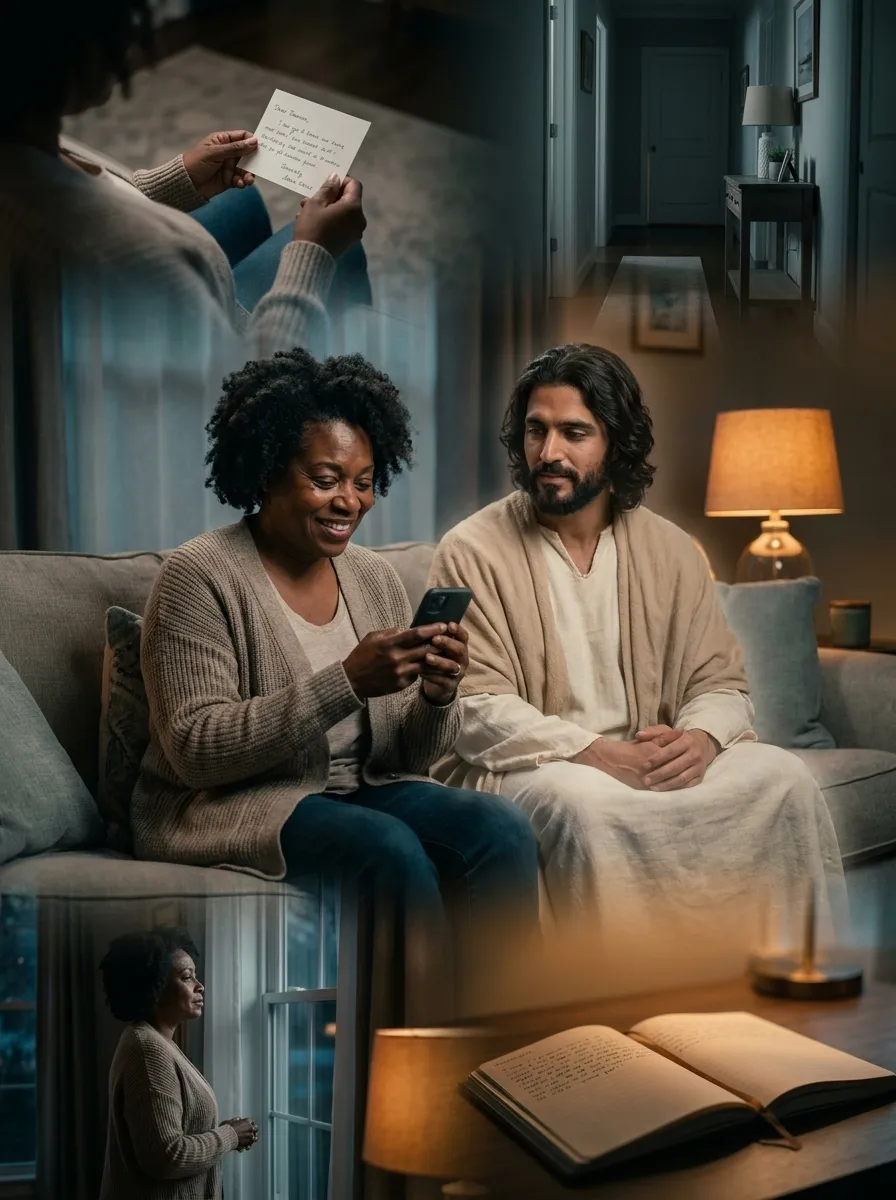
It is possible to be glad for someone and still feel the weight of your own waiting. Those realities do not automatically cancel each other. One person’s breakthrough can be welcomed without making your own unanswered place disappear.
That may be what makes the tension difficult. If their good news were easy to dismiss, there would be less to hold. But when you genuinely want to celebrate what happened for them, the unresolved part of your own life does not necessarily become quieter just because your happiness for them is sincere.
Both can remain. Their joy is real. Your waiting is real.
And sometimes they meet in the same moment without blending into a single, simple emotion. There can be something uncomfortable about admitting that.
Celebration seems as though it should be uncomplicated. If something good happened, perhaps joy should be enough. But your own unfinished question may still be present while you celebrate theirs.
It does not need to interrupt the celebration dramatically. It may simply remain underneath it. A quiet awareness.
Something happened for them. Something still has not happened for you. That difference can become visible without becoming resentment.
It can be noticed without being turned into accusation. There is no need to assign a motive to the tension before allowing it to exist. Perhaps that matters because spiritual comparison can become complicated very quickly.
A breakthrough can seem to carry meaning beyond itself. Once an outcome becomes visible, it may appear to say something not only about what happened, but about God’s involvement in what happened. Then the comparison becomes larger.
If God was present there, what does continued waiting mean here? If their prayer reached a visible outcome, what does your unresolved prayer mean? If their story has changed, what does it mean that yours has not?
Those questions can appear even while celebration remains sincere. That is where the tension becomes difficult to reduce. You do not necessarily want less for them.
You may still want something for yourself. And perhaps there is no contradiction in those two desires, even when they become uncomfortable beside each other. Another person’s breakthrough can make absence more noticeable.
Not because their joy caused your waiting, but because visible change creates contrast. Before the breakthrough, your unresolved place may have simply been your unresolved place. Afterward, it exists beside something completed.
Their before has become an after. Yours may still feel like before. That distinction can be hard to ignore.
And if outcomes begin to carry spiritual meaning, comparison may start asking questions that neither life can answer for the other.
“Without realizing it, many began measuring God’s presence through visible outcomes.”
The difficulty becomes sharper when the visible outcome belongs to someone you care about. It would be easy to let the contrast become a scale. Their breakthrough on one side.
Your waiting on the other. Then the mind begins to ask what the difference measures. More favor?
More faith? Greater nearness? A different kind of relationship with God?
But the outcome itself does not provide those answers. It shows that something happened there. It does not explain why something has not happened here.
That leaves celebration without a formula. You can honor what happened for another person without using their story to interpret your own. Yet even that distinction does not remove the tension.
Their joy may still touch the exact place in you that is waiting. The news may still awaken the question you had managed not to think about for a while. You may still become newly aware of what remains unresolved.
That awareness does not automatically corrupt the celebration. Perhaps the pressure begins when one feeling is asked to prove the other false. If you are truly happy for them, should your own waiting stop hurting?
If your waiting still hurts, does that make your happiness less genuine? Those questions create a demand for emotional purity that the situation itself may never have required. A heart can hold more than one truth at once.
Celebration does not necessarily erase longing. Longing does not necessarily invalidate celebration. Neither one must become evidence against the other.
But faith can become vulnerable where the two meet. There is something spiritually exposing about witnessing the kind of change you have wanted while remaining inside a life where that change has not occurred. The question is no longer abstract.
You have seen an outcome. You know such an outcome exists in at least one life. Now your own absence may feel more specific.
And perhaps this is where visible outcomes begin asking to become evidence. Evidence that God acted there. Evidence that God has not acted here.
Evidence that one story contains divine nearness while another contains distance. But does the difference in what can be seen actually establish any of that? The breakthrough does not become less beautiful if the answer is uncertain.
Your waiting does not become less difficult either. Maybe both stories must be allowed to remain distinct. Their outcome belongs to their life.
Your unanswered place belongs to yours. One does not need to be used as the interpretation of the other. Still, that separation may be easier to state than to live.
Because celebration creates proximity. You are brought close to something you have wanted. Close enough to recognize it.
Close enough to rejoice in it. Close enough, perhaps, to feel the shape of its absence in your own life more clearly. What should faith do with that?
There is no need to force gratitude into an answer. There is no need to turn another person’s breakthrough into a lesson about patience. There is no need to insist that your own response must become spiritually tidy before it can be honest.
The tension can remain tension. You can celebrate without pretending not to wait. You can wait without requiring someone else’s joy to become smaller.
And God’s presence does not have to be measured by deciding which of those stories looks more complete. That leaves something unresolved. Maybe deliberately so.
Because the deeper question may not be whether you are capable of being happy for someone else while still wanting your own breakthrough. You may already know that both realities can coexist. The harder question is what happens when another person’s answered story begins to look like a measurement of your unanswered one.
Does their breakthrough tell you something about your worth? Does it tell you something about your faith? Does it tell you something about God’s distance or nearness?
Or has a visible outcome been asked to carry conclusions it was never able to provide? Their joy remains. Your waiting remains.
And between them sits a question that celebration alone cannot answer:
How do you honor what happened for someone else without making it a verdict on what still has not happened for you?